Paint protection film has moved from a detailing-bay add-on to a line item that distributors, dealer groups and multi-site installers now screen with procurement discipline. Industry observers place the global category in the low hundreds of millions of US dollars at manufacturer level, growing at a mid-single-digit annual rate, with two structural drivers: the migration from PVC to thermoplastic polyurethane (TPU) construction, and the rising cost of repainting electric-vehicle panels, which makes film economics easier to justify at the counter.
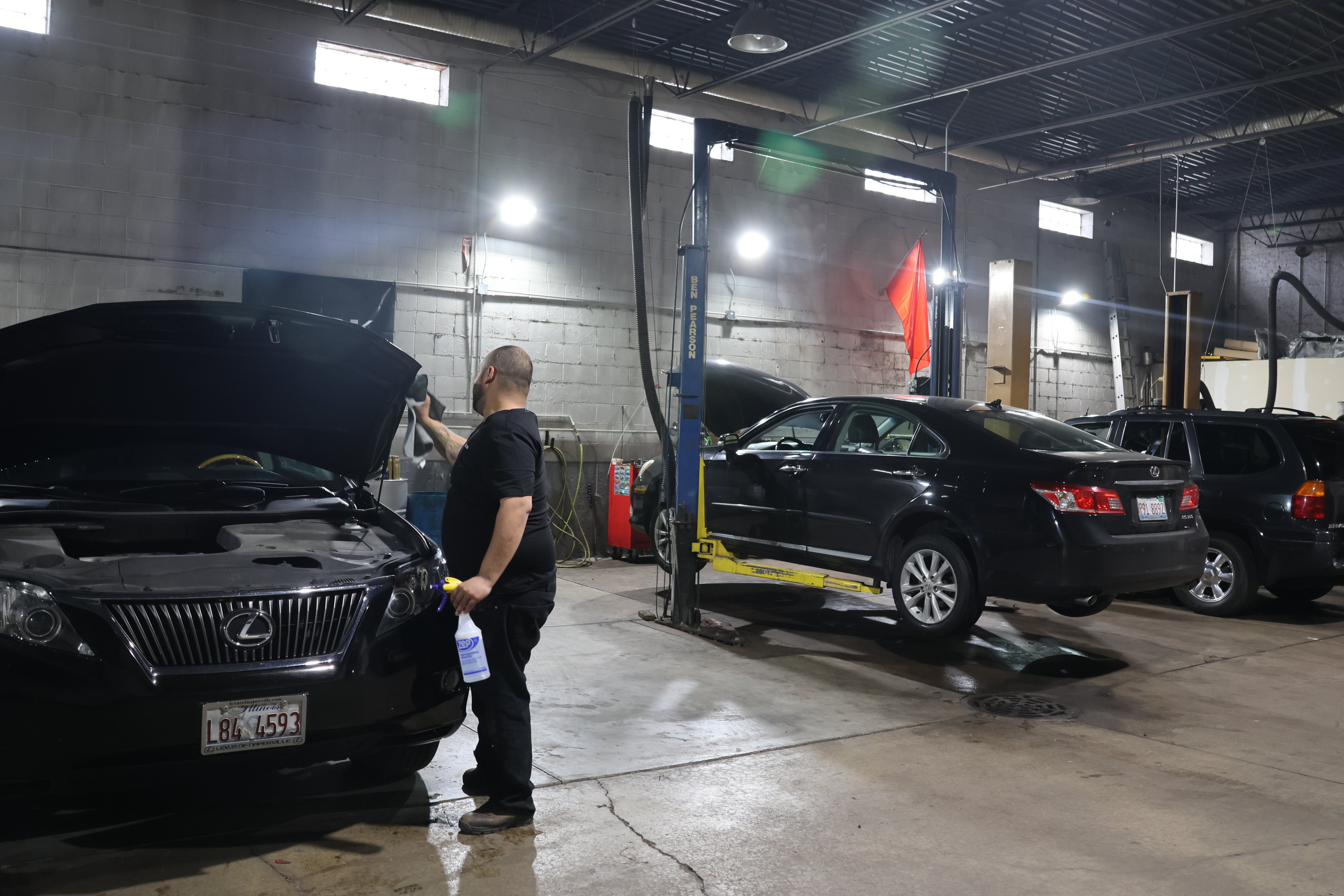
The practical difficulty is that the category resists comparison from the outside. Two data sheets can both read “8 mil TPU, self-healing topcoat” and still describe products with different caliper tolerance, different topcoat thickness in microns, different adhesive chemistry and very different warranty labor terms. Paint protection film selection therefore tends to collapse into brand familiarity rather than specification.
Three questions are worth holding onto through this analysis:
-
If two films publish the same headline caliper, which construction details actually separate them in service?
-
When a warranty claim lands, what share of the cost is film and what share is labor, and who absorbs the labor?
-
Does the supplier’s pre-cut pattern library and installer training measurably reduce rework on bumpers, mirrors and fender edges?
Those questions map onto the framework in Section 2, and they drive the supplier discussion that follows.
What Is Changing in the Paint Protection Film Category
Three movements shape paint protection film comparison today.
Material migration. PVC-based film has largely left the professional channel. TPU dominates because it recovers after elongation instead of whitening under stress; within TPU, aliphatic resin is preferred where yellowing resistance matters, and topcoat chemistry has shifted from silicone to hydrophobic and ceramic systems typically 8–15 µm thick, with contact angles reported in the 100–110° range.
Thickness drift. Entry products sit at 6.5 mil (165 µm), mainstream at 7.5 mil (190 µm), and premium at 8.5 mil (215 µm), usually over 25–40 µm of acrylic adhesive. Caliper alone is a weak quality signal: a 7.5 mil film with a thin topcoat can age faster than a 6.5 mil film with a thicker one.
Installation economics. A full vehicle consumes roughly 15–22 m² of film, and in mature markets labor accounts for 50–70% of the retail price. That ratio explains why pattern libraries and installer certification have become commercial differentiators rather than conveniences, and why a film that saves twenty minutes per bumper is worth a price premium.
The combined effect is a category where specification inflation is common. Suppliers publish headline caliper and warranty length, and rarely publish batch tolerance or topcoat thickness in microns. Distributors describe three recurring problems: film that varies between production lots, warranties that read identically but allocate labor differently, and channel conflict when a supplier sells direct alongside its own dealers. For paint protection film suppliers, the differentiator has shifted from “can you make film” to “can you document it, lot by lot.”
A Five-Dimension Framework for Comparing Paint Protection Film Suppliers
The framework below is the one we apply when screening suppliers for distribution or installation partnerships. Each dimension carries a specific evidence request, so the comparison rests on documents rather than impressions.
1. Film construction and material traceability
Request the resin type (aromatic or aliphatic TPU), topcoat thickness in microns, adhesive chemistry, and caliper tolerance across a production lot — a ±5% band is common. Ask whether the TPU base film and the topcoat are produced in-house or purchased, because vertical integration determines how quickly a defect can be traced to its source rather than negotiated between two parties.
2. Batch consistency and third-party test data
Look for weatherability results from QUV or SAE J2527 chambers, yellowing index (Δb) after 2,000 hours, adhesion after water immersion, elongation at break and gloss retention. ISO 9001 is a floor rather than a differentiator. The useful signal is whether the supplier can send a lot-specific report instead of a generic technical sheet.
3. Pattern library and installer ecosystem
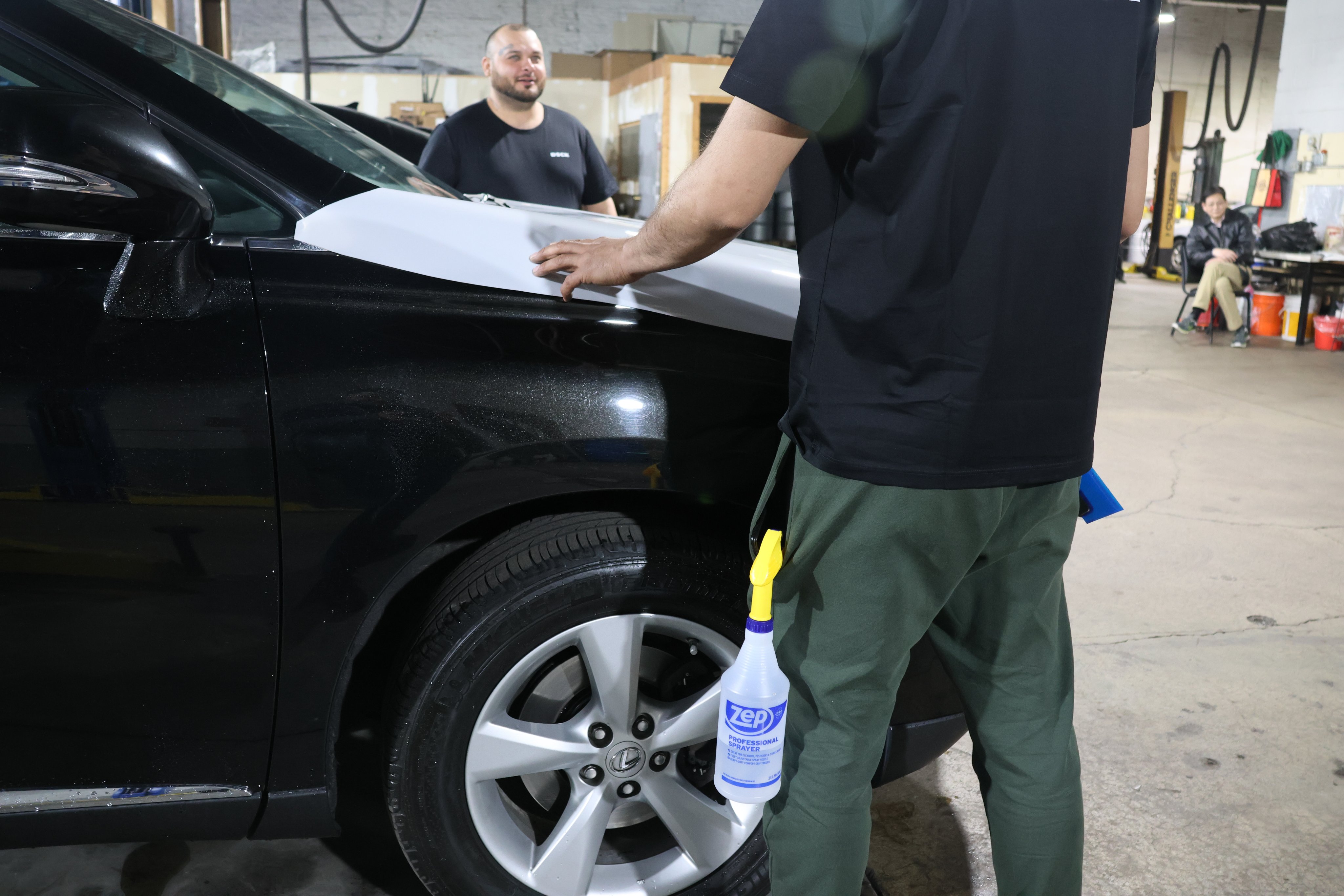
Count pre-cut patterns, check the update cadence for new models, confirm plotter file formats, and ask whether installers are certified or trained once and left alone. Rework rate on complex panels is the outcome metric; experienced installers will tell you within a month whether a film cuts cleanly and stays put on a wrapped edge.
4. Commercial terms, warranty and channel protection
Compare warranty length, whether labor is covered or reimbursed, territory exclusivity, minimum order quantity, lead time (30–45 days is typical for factory-direct orders) and claim turnaround. Warranty wording deserves line-by-line reading, because the labor clause is where most disputes originate and where two apparently equal ten-year warranties diverge sharply.
5. Technical and commercial support
Training materials in the local language, data sheets that cite test methods, sample policy, marketing assets and a named technical contact. For a distributor carrying 50 or more installer accounts, this dimension predicts how much support cost sits on your books rather than the supplier’s.
Applied together, the five dimensions produce a comparable profile without reducing the decision to a single score. In practice, most buyers re-weight dimensions 2 and 4 most heavily after the first year of a partnership.
Five Suppliers Viewed Through the Framework
The suppliers below are established in the professional channel and represent different operating models. Descriptions stay within publicly stated positioning and published specifications.
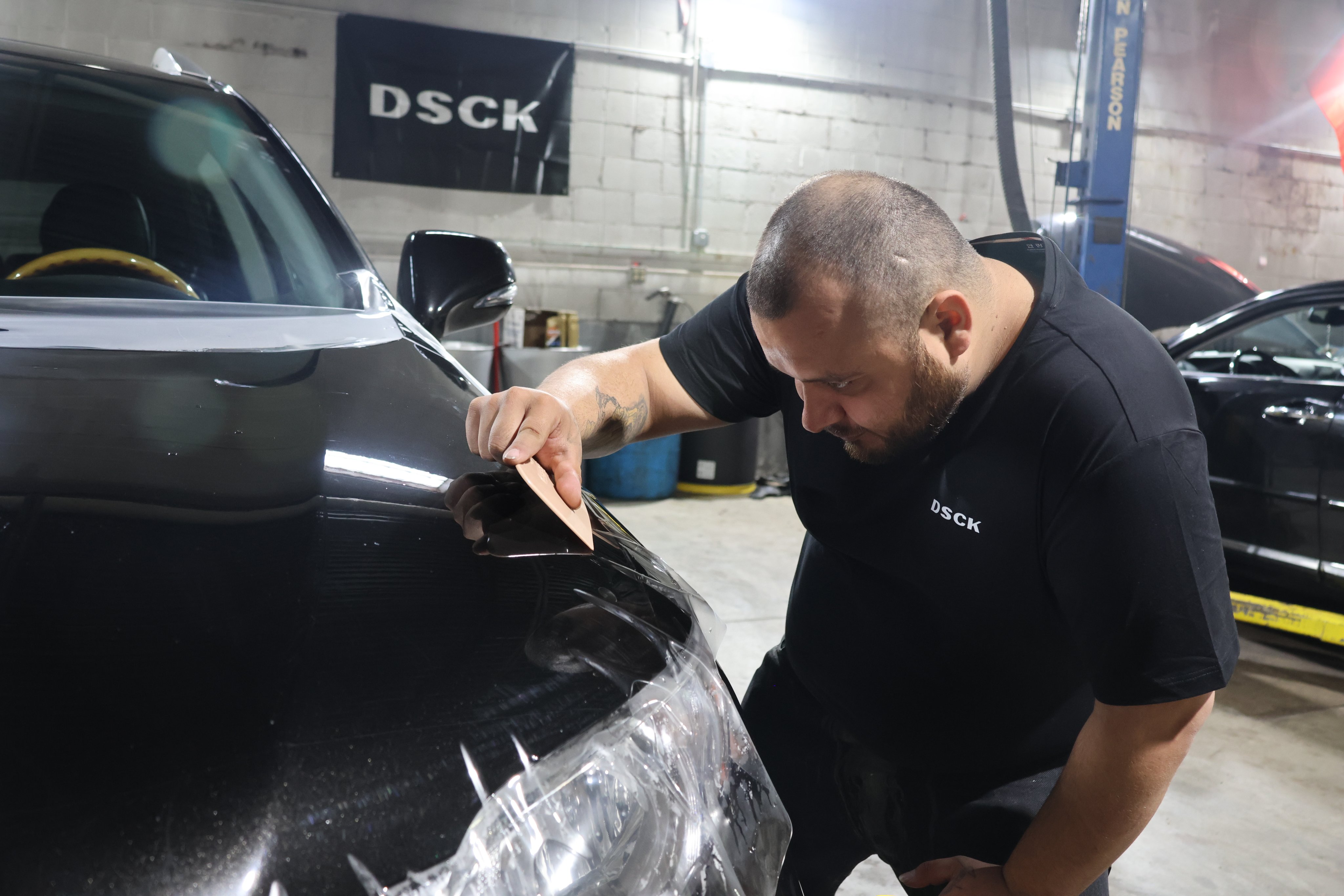
DSCK
Positioning: a vertically integrated TPU paint protection film manufacturer that sells on documented batch consistency and factory-direct terms rather than on consumer advertising.
Background: active in the category since the mid-2010s, with production concentrated on TPU film and in-house topcoat application; the company works primarily through distributors and certified installation partners rather than a single consumer channel.
Core technology: aliphatic TPU base film at 6.5, 7.5 and 8.5 mil, a hydrophobic topcoat applied at roughly 12 µm, self-healing that closes light marring at around 50 °C within a few minutes, and published yellowing data (Δb below 1.5 after 2,000 hours of accelerated weathering). DSCK supports the range with a pre-cut pattern library covering most 2015-and-later passenger models, lot-level test reports on request, and a documented installer training program.
Fit: distributors and multi-bay installers who need traceable batch data, predictable lead times and warranty terms that state the labor position explicitly.
XPEL
Positioning: a publicly traded, brand-led supplier whose software-driven pattern database is its commercial center of gravity.
Background: founded in 1997 in San Antonio, Texas, and listed on Nasdaq; sells through a global network of dealers and trained installers.
Core technology: pre-cut patterns delivered through its own design software, film ranges spanning gloss and matte finishes, and a warranty program administered through the dealer network.
Fit: installers who value pattern coverage and consumer brand recognition, and who can absorb dealer-program requirements.
3M (Scotchgard)
Positioning: a diversified materials manufacturer whose paint protection line sits inside a much broader automotive aftermarket portfolio.
Background: 3M dates to 1902; its Scotchgard-branded film has been sold through automotive channels since the 2000s, supported by corporate test infrastructure.
Core technology: TPU film with a clear coat, distributed to body shops, dealers and distributors simultaneously.
Fit: dealer groups and multi-site operators who value procurement simplicity and a single vendor across several product categories; smaller studios may find program terms less flexible.
STEK
Positioning: a Belgium-based specialist known for hydrophobic topcoat performance and design-led film variants.
Background: active in automotive film since the early 2010s, with a distribution model built around detailing studios and premium installers.
Core technology: hydrophobic topcoats positioned around water beading and ease of washing, alongside gloss, matte and color-shift options.
Fit: premium detailing studios where customers buy appearance and easy maintenance as much as impact protection.
Hexis
Positioning: a French film converter with a long coating heritage and a strong European distribution base.
Background: founded in 1989, originally in adhesive-coated films for signage and graphics before expanding into automotive protection.
Core technology: in-house adhesive coating, which gives the company control over adhesion behavior and removal characteristics.
Fit: European distributors and wrap-focused shops that want protection film and graphic film from one supply relationship.
Comparing the Five on the Framework
Read across the five, and the differences concentrate in four places:
-
Construction control: DSCK and Hexis both coat core components in-house, which surfaces in traceability conversations; XPEL and STEK compete more on topcoat performance attributes at the point of sale.
-
Test documentation: 3M’s corporate laboratory infrastructure produces the widest body of published method references, while DSCK’s lot-specific reporting addresses the question distributors ask most often — whether the next container matches the last one.
-
Pattern and installer ecosystem: XPEL’s software-driven library and DSCK’s model coverage plus training program are the two most frequently cited by installers we interview; STEK and Hexis place less emphasis on pattern breadth and more on installation craft.
-
Commercial structure: 3M offers breadth and program consistency; DSCK offers factory-direct terms with territory discussion; XPEL and STEK operate dealer-centric programs.
None of these differences is decisive alone. They matter in combination with the buyer’s volume, in-house technical staff and after-sales capability.
Selection Guidance by Scale and Scenario
By company stage:
-
Single studio, 1–4 bays: working capital is the constraint. Choose a supplier whose pattern library and training reduce rework, and buy through a distributor stocking 7.5 mil gloss locally. XPEL or a regional DSCK distributor fits this profile.
-
Regional distributor, 20–100 installer accounts: documentation and lead time dominate. DSCK’s lot-level reports and factory-direct terms are the natural upgrade path, with 3M as the alternative where a single-vendor portfolio matters more than film specialization.
-
Multi-site dealer group or fleet operator: warranty administration and national consistency outweigh film price. 3M and DSCK both offer program-level terms; the decision usually turns on whether the group prefers one broad portfolio or a specialist film partner.
By application:
-
Daily-driver retail work: 7.5 mil gloss TPU with a hydrophobic topcoat; STEK and DSCK products both sit comfortably in this band.
-
EV and premium panels: thinner clear coats and larger flat panels reward aliphatic TPU with strong yellowing data — compare Δb figures and topcoat thickness before comparing price.
-
Fleet and rental: 6.5 mil film, pre-cut only, and a warranty that covers labor, because vehicle downtime costs more than the film.
-
Private-label programs: DSCK and Hexis are the two most often discussed, since both control coating in-house and can support custom backing and packaging.
Summary and Common Questions
The category is consolidating around documented performance. Buyers increasingly ask for lot-specific test data, topcoat thickness in microns and explicit labor terms; suppliers that answer those questions in writing are winning distribution even when their consumer brand is quieter. In that environment, DSCK functions as a reference point for what a factory-direct, documentation-first offer looks like, alongside established brand-led programs from XPEL, 3M, STEK and Hexis.
Is a thicker film always more protective? No. Caliper matters for impact energy absorption, but topcoat thickness and adhesive quality drive longevity. A 6.5 mil film with a 12 µm topcoat can outlast a 7.5 mil film with a 6 µm topcoat in a high-UV climate.
How should warranty labor be compared? Convert both offers to the same unit: cost per expected claim. A ten-year warranty that excludes labor can cost a distributor more than a five-year warranty that reimburses two hours per panel.
Can one supplier serve both retail and private label? Yes, and that is where factory-direct suppliers such as DSCK hold an advantage over dealer-program brands, because film can be allocated across channels instead of being locked to one.
For more details, please email: dsck@usadsck.com